Lead Generation
Why More Leads Won't Fix an Underperforming Pipeline

Generating more leads is one of the most common growth objectives in B2B marketing.
When pipeline is weak, the instinctive response is often to increase activity: spend more on advertising, launch another campaign, generate more content or find new ways to drive enquiries.
Sometimes that works.
But if the underlying commercial system isn't working effectively, increasing lead volume can simply create more of the wrong opportunities, more pressure on sales teams and more marketing spend without a corresponding increase in revenue.
The real objective shouldn't be more leads.
It should be a more predictable pipeline of qualified opportunities.
This article explores why lead volume can be a misleading measure of success, where B2B pipelines commonly break down and what businesses should have in place before increasing investment in lead generation.
The problem may not be at the top of the funnel
When businesses aren't generating enough new revenue, it's easy to conclude that they need more prospects entering the pipeline.
But pipeline performance depends on much more than volume.
A business could be generating plenty of enquiries and still struggle to create sufficient sales opportunities.
The problem might be targeting.
It might be the proposition.
The messaging may not differentiate the business sufficiently.
Marketing and sales may have different definitions of a qualified opportunity.
Or prospects may be entering the pipeline but failing to progress because the buying journey and follow-up process aren't working effectively.
More leads won't compensate for weaknesses elsewhere in the commercial system.
Before investing in additional lead generation, businesses need to understand where opportunities are actually being lost.
Lead quality changes the economics of growth
Not all leads have equal commercial value.
A campaign generating 100 enquiries that produces two genuine sales opportunities may be considerably less valuable than one generating 20 enquiries that produces five.
Yet traditional marketing reporting can encourage businesses to favour the first campaign because its headline numbers look stronger.
Clicks, impressions, enquiries and cost per lead all have a role.
But none tells you whether marketing is creating commercially valuable demand.
That requires looking further through the funnel.
What proportion of leads become qualified opportunities?
How many progress into meaningful sales conversations?
What is the value of pipeline generated?
How many ultimately become customers?
And what did it cost to acquire them?
Once those measures become visible, the conversation changes from how cheaply can we generate leads? to how efficiently can we generate customers?
That is a much more useful commercial question.
Five things need to work together
Predictable lead generation isn't created by a single campaign or channel.
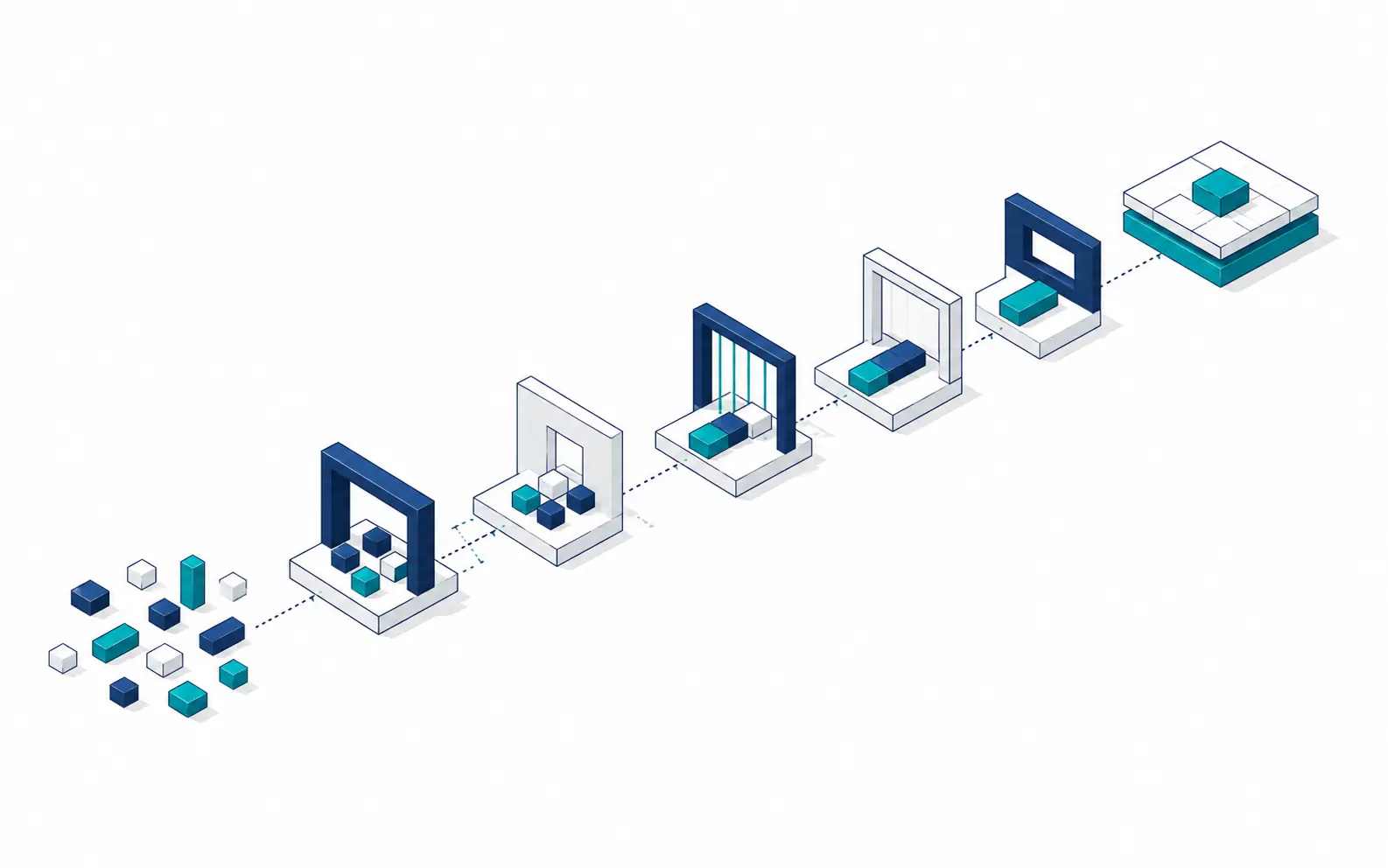
It comes from several elements of the commercial system working together.
1. A clearly defined ideal customer
Effective targeting starts with knowing which businesses you are trying to reach and why they represent a commercially attractive opportunity.
Broad targeting may increase reach, but greater reach doesn't necessarily create better pipeline.
The clearer the ICP, the easier it becomes to focus investment on prospects with the strongest potential fit.
2. A compelling proposition
Prospects need a reason to choose your business.
A proposition that is too broad, internally focused or indistinguishable from competitors makes every subsequent stage of lead generation harder.
Strong propositions make the value of engaging with your business clear.
3. Messaging that reflects the buyer
Good messaging connects what you sell with the problems, priorities and outcomes that matter to the customer.
That means communicating from the buyer's perspective rather than simply describing products, services or capabilities.
4. Effective demand generation
Channels and campaigns then create opportunities to put that proposition in front of the right audience.
Paid search, paid social, content, outbound activity and other channels can all contribute.
But the channel is the delivery mechanism—not the strategy.
5. A defined route from lead to opportunity
Generating an enquiry is only the beginning.
There needs to be clarity around qualification, ownership, follow-up and progression.
Marketing and sales should understand what happens when a lead enters the business, what constitutes a qualified opportunity and how performance will be measured.
If any one of these elements is weak, increasing campaign activity can magnify the problem rather than solve it.
Where B2B lead generation commonly breaks down
Many lead-generation problems occur in the gaps between activities rather than within individual channels.
Marketing may optimise campaigns around lead volume while sales judges success by opportunity quality.
Sales may reject leads that marketing considers qualified.
Campaign reporting may stop at form submissions, making it impossible to understand which activity creates pipeline.
Or the business may continually change campaigns because short-term results appear disappointing without understanding what is happening further through the buying journey.
These aren't necessarily advertising problems.
They're alignment, measurement and commercial-process problems.
And spending more on media won't solve them.
A better question than “How do we get more leads?”
Before increasing lead-generation investment, leadership teams should ask:
- Are we targeting the businesses most likely to become valuable customers?
- Is our proposition sufficiently compelling and differentiated?
- Does our messaging reflect the priorities of the people we're trying to reach?
- Do marketing and sales agree on what constitutes a qualified opportunity?
- Can we track leads through to pipeline and revenue?
- Do we understand where prospects are dropping out of the buying journey?
- Are we optimising marketing around commercial outcomes rather than lead volume?
If the answers aren't clear, there may be more value in strengthening the foundations before increasing activity.
From lead generation to predictable pipeline
The goal isn't to create a perfect commercial system before marketing begins.
Businesses need to test, learn and improve.
But there is an important difference between learning from controlled activity and continually increasing spend in the hope that greater volume will solve an underlying problem.
Effective lead generation creates a feedback loop.
Marketing generates demand.
Sales provides insight into lead quality.
Pipeline data shows which audiences, propositions and campaigns are producing commercial value.
That insight then improves the next round of activity.
Over time, the business becomes better at identifying where to invest, which prospects to prioritise and how to convert demand into revenue.
That's how lead generation becomes more predictable.
Not by generating as many leads as possible, but by continually improving the system that turns the right prospects into customers.
Key Takeaways
Key Takeaways
- More leads don't automatically create more revenue.
- Lead quality matters more than lead volume when assessing commercial performance.
- ICP, proposition, messaging, demand generation and sales follow-up need to work as one system.
- Marketing should be measured beyond the initial enquiry and into pipeline and revenue.
- Increasing marketing investment before understanding where the funnel is underperforming can amplify inefficiency.
- Predictable pipeline comes from continuous learning and improvement across the whole commercial journey.